The Light House
Academic project
How can a place carry memory forward?
Within Yeoville’s damaged African Market, I explored how a pavilion could act as a memorial while remaining useful every day. Working at a small scale brought the focus onto material, assembly and the connections between parts.
Remembrance,
in everyday use.
The pavilion is an anchor for gathering within a neighbourhood shaped by migrant communities and informal trade. Its position connects it to the market’s daily movement and a shared seating space.
Thinking through
the parts.
I developed the pavilion through its assembly: a steel structure, supported screen panels and a sculptural roof. The exploded drawings explore how the individual components come together.
Where solid
meets light.
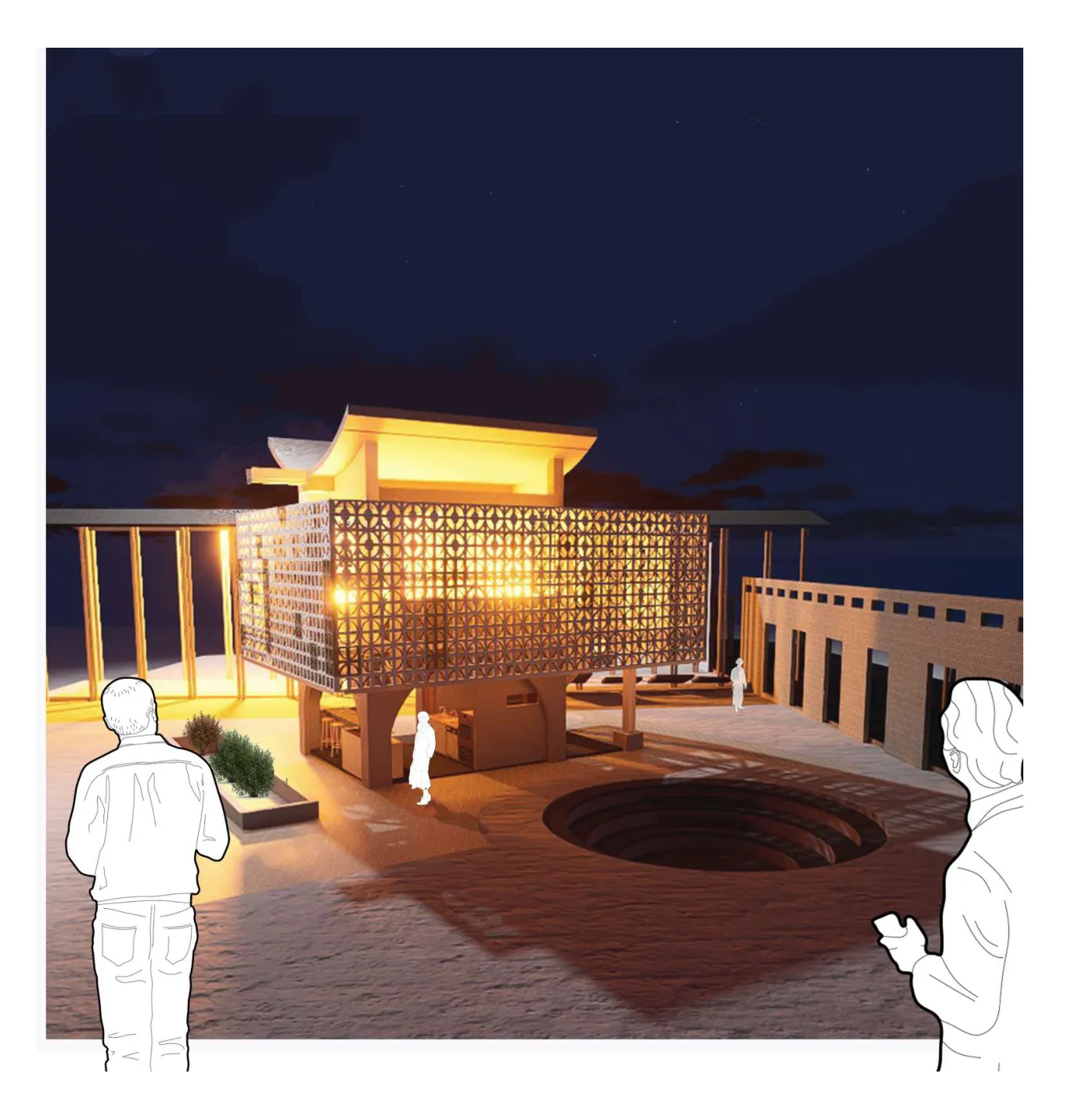
The patterned breeze-block screen filters light and defines an enclosure. Some blocks are proposed with crushed concrete from damaged parts of the site, carrying a physical trace of its history into the new work.
- Steel frame
- Concrete breeze blocks
- Precast concrete roof
A small place.
A visible memory.
At night, light makes the screen legible from the gathering space outside. The proposal remains a small, everyday place, while marking a history that should remain visible.
Read the drawings.
Open a sheet for a closer look. Zoom in to read plans, sections and construction details.
“Here, remembrance and everyday use occupy the same small piece of the city.”PHINOLA ARUNA / THE LIGHT HOUSE